Thursday, September 11, 2014

Introducing Texas Weight Loss Strategies

Dr. Kathi Perry has added a new element, Texas Weight Loss Strategies to the services offered at Health by Hands Wellness Center, Arlington, Texas. 

Dr. Kathi says, "For some time now I have felt the missing component, of our total wellness approach to health, has been weight loss. I cannot tell you the number of patients who have said: I know I would feel better if I could just get this weight off."  

After two years of research Dr. Kathi has selected a program she feels is the most comprehensive approach to weight loss, available today. This weight loss strategy is a proven program, which not only delivers on the promise to help the patient lose weight, but will improve your overall health and help you keep the weight off.  

Dr. Kathi's husband, Craig, has retired from Boeing in order to manage the program. He will also be conducting weight loss seminars.

Call the clinic phone: 817-930-0600 or TWLS phone: 972-975-TWLS (8957) to reserve your space at the next seminar or schedule a consultation! We look forward to introducing you to a major breakthrough in weight loss!


Thursday, August 29, 2013

Osteoporosis: Finding the Answers


Bone is a live tissue and constantly regenerating or degenerating!

More than 10 million people in the United States, most of them women, suffer from osteoporosis, a debilitating bone disease in which the bones become porous and fragile and may then break.  

While osteoporosis is most common in women after menopause, elderly men are also affected.
Osteoporosis has no early symptoms, and it is not usually diagnosed until after age 50 and after a fracture occurs.  Because the symptoms -- stooped posture, brittle bones, pain with movement -- are considered by many as simply the result of aging, the majority of people with osteoporosis don't know they suffer from the disease.

Early diagnosis is still the best tool for preventing and treating osteoporosis. To determine if you have osteoporosis, your doctor may arrange for you to have a bone density test measurement scan. Bone density measurements are helpful in deciding whether to begin a prevention or treatment program. Bone density measurement scans use low-dose radiation, less than one-tenth the radiation from a standard chest X-ray...and take only minutes to perform.

Can Osteoporosis be reversed? Yes! The scientifically tested protocols of the BStrong4Life System have been proven to increase strength, balance, bone-mineral density while improving an individual's overall quality of life.

BStrong4Life is the only program available that has the potential to help reverse the aging of your structure by strengthening your entire musculoskeletal system.  BStrong4Life Arlington at Health By Hands Wellness Center is the Bone Health Resource for Arlington and surrounding area.  

Amazingly, just once a week, a 20 minute session has the potential to increase your bone density, and may help to reverse the effects of osteoporosis, strengthen your spine, and improve your athletic performance! 
 
For more information that may help in reversing the effects of osteoporosis as well as strengthening your muscles, bones, and spine...contact Health By Hands for Bone Health Treatment and Therapies with the Bstrong4Life System, Arlington, Texas! Clinic phone number: 817-930-0600. 
 

Friday, August 23, 2013

Say Goodbye to Gluten: Over 200 Clinically Confirmed Reasons to Avoid Wheat

By: PF Louis, NaturalNews
 
This title is the same as a recent GreenMedInfo. com. It contains a list of over 200 health problems, with celiac disease at the top and including many more not normally associated with gluten intolerance.

The author and founder of GreenMedInfo.com, Sayer Ji, prefers the term gluten toxicity to gluten sensitivity or gluten intolerance... "in order to shift the focus away from the victim back to the aggressor, the gluten itself."

Sayer Ji's GreenMedInfo.com article lists all the disorders linked to gluten. They are hyperlinked to articles and abstracts of clinical studies recorded in MedLine since 1971.   
 
Explaining the attack on wheat and other grains 
Negative reports on wheat and other grains have risen considerably in the past decade. The dramatic rise of celiac disease, a chronic gut inflammation that destroys intestinal villi (tiny tubes) responsible for absorbing nutrients, has been a major focus.
 
The gluten toxicity that brings on Celiac disease and other autoimmune reactions is mostly from peptides contained in gluten known as gliadin proteins, which damage the intestinal tract.

In addition to Celiac disease, which if undetected leads to malnutrition that creates other diseases, gluten toxicity can result in several other manifestations of poor health, including chronic fatigue and mental disorders.

Lectins, sticky proteins common to all plants for self defense, are a prominent feature of wheat germ agglutinin (WGA). In addition to flattening out intestinal villi and causing Celiac, they can penetrate gut linings and create leaky gut.

Once lectins get into the blood stream, they can bind to leptin receptors, blocking the leptin sensitivity that lets you know you've had enough to eat, creating a sluggish metabolism, and disrupting insulin balance. In other words, it leads to obesity and diabetes.

So how did the "staff of life" become a week of disease?

This situation has permeated almost all nations. There are some exceptions; for instance, most of Europe doesn't permit chemically bleaching flour to produce white bread. They use sunlight to "bleach" wheat.

For starters,
wheat is not the same today. It has been hybrid over time to resist fungus, grow more quickly, and be more pliable for industrial bread baking. 50 years or so ago, wheat contained only five percent gluten. Today, it is 50 percent gluten.

The food industry's concern for production efficiency and perception of consumer demands has focused on the bottom line with the usual disregard to the negative health consequences of fellow humans. Breads and other baked goods are hastily produced with additives and short cuts that are actually toxic.

In the UK, some of Europe, and North America, slightly different high speed methods of baking evolved over time. By adding "improvers" with usually toxic additives and mixing the dough violently, loaves of bread could be baked, cooled, and packaged within a few short hours.

Agricultural resources then sped up the hybrid process for wheat to accommodate the baking industry's mechanical requirements of pliable proteins, leading to the 10-fold increase of wheat's gluten since that time.      
 
Having your cake and eating it too 
Not all of us are prepared to go strictly Paleo and exclude all grains and legumes. Some of us still prefer not to eat animals, and if the food supply bottom falls out, many aren't ready and able to kill and skin deer or other animals to survive.

Grains such as rice and dried legumes are easy to hoard and use for survival if the store shelves become empty overnight. The common concern for rice and legumes is phytates or phytic acid, which can block minerals from being absorbed in our bodies.

Overnight soaking, a prerequisite for cooking dry beans, has been known to minimize phytates, or phytic acid. Rice can be soaked overnight as well. The process of cooking itself reduces phytic acid.

Using sprouted wheat flour can ameliorate some of WGA's toxicity. Baking with sourdough starters instead of normal baker's yeast can help also, while combining both may be optimum (http://www.foodrenegade.com). It appears Whole Foods bakery does so.

Wheat's gluten toxicity is reduced by sourdough starters properly fermented for 24 hours or more. A University of Alberta Canadian cereal microbiologist, Michael Gaenzle, suggests that sourdough bread, homemade or from a trusted bakery, may be at least a solution for gluten toxicity.

He referred to a study where recovered Celiac patients suffered no consequences from eating fermented (sourdough) wheat bread for two days. Those who ate regularly produced wheat bread did have a relapse.

The demand for continuing at least a partial grain diet safely has inspired one company, Vitamin Research Products to offer a natural supplement called Lectin Lock, which they claim will help reduce WGA gummy lectins.

Chronic health issues may or may not be from WGA toxicity. Katherine Czapp, whose WATF article is linked below, suggests testing for Celiac disease with Enerolab. (https://www.enterolab.com/default.aspx)
 

Sunday, August 4, 2013

Revealing the Deadly Secrets of Statin Drugs


How to protect your heart without damaging your body

Like most Americans, you're probably doing all you can to keep you cholesterol levels in a healthy range. Taking action is fundamental to preventing heart disease, the leading cause of death in the U.S. Last year alone, Americans spent over $34 billion on cholesterol lowering statin drugs, and doctors wrote over 200 million prescriptions on brands like Vytorin, Lipitor and Crestor!

The Unspoken Dangers of Statin Drugs
Statins, which are now considered the best-sellling drugs of all time, are "the golden child" for those big pharmaceutical companies. But, that doesn't mean these drugs are your best option for cholesterol control, or that they don't have serious side effects. Statins work by blocking production of cholesterol, but they also deplete levels of CoQ10, which your body needs for energy production, particularly in heart cells. Unfortunately, many doctors fail to recommend taking supplemental CoQ10 along with statins.  Research is uncovering other serious effects such as memory loss, headaches, and difficulty sleeping.

Know the Danger Signs of Statin Drugs:
  • Muscle pain and weakness
  • Numbness and nerve damage
  • Extreme fatigue
  • Shortness of breath
  • Confusion problems
  • Depression and hostility
  • Sexual Dysfunction
  • Heart Failure
However, what's extremely scary, and rarely discussed, is that statins can actually kill. As USA Today reported, "Statins have killed and injured more people than the government has acknowledged."  What's just as troubling, is that most people are unaware that there is a safe, natural way to maintain healthy cholesterol levels without the risks associated with statins.  
 
A Page Right Out of Big Pharma's Playbook
Several years ago, a large drug company tried to put an end to sales of a supplement called Red Yeast Rice, a natural heart remedy used in Asia for hundreds of years. Studies were beginning to show that Red Yeast Rice could safely and effectively balance cholesterol levels with no side effects and with long term benefits.  This drug company was terrified they would lose their lucrative hold on the cholesterol-lowering drug market if word got out that there was a safe, natural alternative to their side effect-laden drug! A firestorm of controversy ensued, but Big Pharma's strategy failed this time...they were unable to get the FDA to enact a ban on Red Yeast Rice.  
 
Red Yeast Rice: The Solution Doctor's Don't Know About Big Pharma doesn't want you to know this, and your doctor may be completely unaware, but research has unequivocally proven Red Yeast Rice can help you achieve optimal cholesterol levels with no side effects. In fact, this has been proven in hundreds of clinical studies published in prestigious medical journals, such as the AMA of Internal Medicine and the American Journal of Clinical Nutrition. In addition to reducing "bad" LDL cholesterol levels, studies have shown Red Yeast Rice can even improve "good" HDL, cholesterol levels. Best of all, unlike statins, you don't need to take Red Yeast Rice for the rest of your life, as you get long term benefits, even if you stop taking it, plus it's been proven to be very safe.  
 
Buyer Beware: Not All Red Yeast Rice Is Equal
It's important that you choose a product made with organic Red Yeast Rice, to ensure that it is of the highest quality, and that it has been processed to remove citrinin, a potentially toxic byproduct of the fermentation process. Purchasing low quality Red Yeast Rice may actually cause more harm than good, and you don't want to cut corners when it comes to heart health! Choose a supplement that is made in the USA and contains a clinically effective dose of 1,200 mg of pure, organic Red Yeast Rice.
 
How To Get the Most Out of Red Yeast Rice 
According to Stop Aging Now, an authority on natural heart health, Red Yeast Rice is most effective when it is combined with 3 synergistic ingredients. The most essential of these is CoQ10, which is absolutely critical for a strong and properly functioning heart. Also important are Resveratrol, a powerful heart-protecting antioxidant and standardized pine bark extract, which enhance the cholesterol balancing effects of Red Yeast Rice for optimal heart health.  
 
Helping Thousands Balance Cholesterol Naturally
Stop Aging Now has developed a breakthrough Red Yeast Rice formula, called RED-Q10, which contains 1,200 mg of organic Red Yeast Rice and 3 synergistic ingredients that have been proven in clinical research to provide exceptional protection for your heart; 100 mg of CoQ10, plus standardized Trans-Resveratrol and pine bark extract.  According to experts, RED-Q10 provides comprehensive cardiovascular support unmatched by any other formula. 
 
 (These statements have not been evaluated by the FDA. This product is not intended to diagnose, treat, cure, or prevent disease). 

Wednesday, July 3, 2013

Seven Herbs that Deter Flies Naturally

Herbs seem to work best if they are moved around once in awhile. It brings the oils to the surface of the leaves and releases more of what it is that the pests don't like. Just brushing against a growing plant or stirring up the leaves of a dried one should do it.

BAY LEAF
You can grow bay outside in the summer, but you will need to bring it indoors during the winter months. You can always buy dried bay leaf at the store if you find you are unable to grow it; the dried variety that you put in stews and soups works as well as the fresh for keeping pests away. You can put one bay leaf in fifty pounds of wheat berries or organic white flour and it will keep the weevils out of it. If you do not happen to buy flour in those quantities you can add a bay leaf to a smaller sized container with similar results. Other items that it will protect are: barley, cornmeal, oatmeal, quinoa, and rice.Most cereal products will be just fine for months with the bay leaves to protect them. Scatter a few leaves on the pantry shelves to repel moths, roaches, earwigs, and mice. Flies seem to hate the smell of bay leaves too. Who knew they had such sensitive olfactory (sense of smell) nerves?
  
BASIL
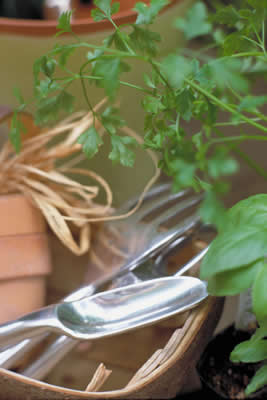
There are about a million kinds of basil with new varieties being introduced all the time. Basil is a beautiful fragrant plant that grows easily in most climates. It even tolerates the dry Texas heat pretty well.  Most people know fresh basil is delicious in pesto, tomato based dishes, and salads; but, did you also know that it is one of the best ways to keep flies out of your house? Just plant basil next to the doors, use as a foundation planting mixed in with your flowers, or plant in containers...The flies will stay far away.
 
You can grow basil in containers by your picnic table or on your patio and cut a nice size bunch of it to decorate the blanket with when you go to a remote picnic spot. As an added bonus, mosquitoes don't like it either. Choose your favorite, all the basil that I have tried works equally as well.


LAVENDER
Lavender smells wonderful and if you have never used lavender buds in cooking you should give it a try. In small amounts it adds a wonderful floral and citrus flavor to baked goods, meats, and even vegetables. Lavender also repels moths, mosquitoes, and fleas.
  • Hang a bundle of it in your closet or lay a few sprigs of it in with the out of season clothes you are storing.
  • Grind it to a powder and sprinkle it on your pet's bedding.
  • Grow it in containers on your patio to repel mosquitoes.
  • Grow it in your kitchen garden to keep rabbits out of your lettuce and spinach
MINT
Mint, catnip, and pennyroyal planted around the foundation of your house can keep both ants and mice out of your home. Neither of these pests seem to like the smell and all but the most determined will head to a better smelling yard. You can also place shallow bowls of the dried mint leaves in your pantry to discourage mice. Pennyroyal is also repugnant to fleas, ants, flies, and mosquitoes. Just be careful of it because large amounts of pennyroyal can be toxic to pets and children. You can place dried pennyroyal on your pantry shelves and it will keep ants away. Just a quick warning about mice. They love anise. Keep anise in jars or it will draw mice to your pantry no matter how much mint you have out! You can use anise to bait live traps with excellent results.

ROSEMARY
Rosemary is one of my favorite herbs, not only for cooking and grilling but because it has a number of uses medicinally and as a household herb. As it grows it repels mosquitoes. Try planting it around your patio or any area that you use in the evenings to keep the air smelling fresh and the mosquitoes on someone else's property. Rosemary also repels cats, so planting it around the kids sandbox is a good idea. You can use rosemary springs under the cushions to keep the cats off the furniture but beware - the oils in the rosemary can stain the cushions. Be sure they are the one sided type.
 
SWEET WOODRUFF
This herb has long been used to deter carpet beetles and moths. Just lay it beneath wool carpets (or other types). It may also deter ants. An added benefit is that it releases a sweet scent when you walk across your rugs.
 
TANSY
Tansy is another little known herb that repels flies, ants, fleas, moths, and mice. Its flowers resemble marigolds or yellow Bachelor's Buttons and it makes a great foundation planting. Tansy was traditionally used by churches as a strewing herb (spread and scattered loosely around the grounds) in the Middle Ages. Herbs were the original household cleaners, disinfectants, and bug repellents. They had been used for thousands of years with good results before humankind came up with toxic chemicals in a can. These herbs are not only better for the environment; they actually improve the environment. Herbs continue to work for you when you have finished with them and discarded them to the compost heap. They enrich the soil, add nutrients, and some (like Valerian) attract beneficial earthworms. Next time you are tempted to reach for the fly spray, reach for the basil or bay leaf instead. 
 
NATURAL FLY RELIEF FOR YOUR BARN 
For those of us with barns and corrals you can utilize the most effective, safe, and natural fly killer from the chief fly guy, Tom Spaldling; click for more amazing information:  Spalding Fly Predators!  
 
(Article, 7 Herbs that deter flies naturally, from Marye Audet, Planet Green, 2012, TLC Discovery Communications online)

Monday, June 10, 2013

Sugar Consumption a "Public Health Crisis" Aggravated by GM Sugar Beets

By Carolanne Wright
 
Sugar is exceptionally toxic and leads to heart disease, metabolic syndrome, and cancer -- it can even be equated with addictive drugs like cocaine, according to prominent medical experts. Add to this the fact that genetically modified (GM) sugar beets now dominate the U.S. market, a healthy future certainly looks bleak. Not only are Americans dealing with the negative effects of consuming elephantine amounts of sugar, but now the health dangers of genetically modified organisms through Roundup Ready sugar beets are in the mix.
 
A hidden public health crisis 
As a specialist in pediatric hormone disorders and the leading expert in childhood obesity at the University of California School of Medicine in San Francisco, Robert Lustig is on a mission to educate the masses about the dangers of refined sugar. "Sugar is not just an empty calorie, its effect on us is much more insidious. It has nothing to do with the calories. It's a poison by itself," declares Lustig. He is clear about the definition of sugar -- it doesn't matter whether it is high-fructose corn syrup, white or brown, from beets or cane. To Lustig; it is all the same, causing metabolic disorders like Type 2 diabetes, and obesity along with cancer and heart disease.  
 
He believes that the American lifestyle with its high sugar consumption is killing us. "Ultimately, this is a public health crisis, and when there's a public health crisis you have to do big things and you have to do them across the board. Tobacco and alcohol are perfect examples ... I think that sugar belongs in this exact same wastebasket," said Lustig in a 60 Minutes interview. To make matters worse, refined sugar is highly addictive -- compared to cocaine by many in the health industry due to the mechanism of triggering pleasure centers in the brain when consumed.

Lewis Cantley, director of the Cancer Center at Beth Israel Deaconess Medical Center is convinced that 80 percent of all cancers are driven by the effect of insulin on tumor cells. Sugar consumption can lead to insulin resistance which causes the pancreas to secrete excess insulin. Researchers have found that insulin along with a hormone known as insulin-like growth factor, encourage tumor growth.
 
More dangers ahead with GM sugar beets 
The USDA recently deemed that genetically modified sugar beets are 'safe' and deregulated the crop. Since 2008, a lawsuit has been raging between the agency and groups like the Center for Food Safety, Organic Seed Alliance and the Sierra Club about the safety of GM sugar beets. Now, thanks to the USDA, sugar from the beets can spread unhindered throughout the food supply, contaminating everything within reach. Almost 95 percent of U.S. sugar beets come from GM seeds -- an amazing feat considering they were only approved for planting in 2005. Sugar beets comprise over 50 percent of U.S. sugar production while the rest comes from sugar cane.

GM crops have been shown to increase the likelihood of cancer, changes in major organs and the gastrointestinal tract, allergic reactions, infertility and accelerated aging. GM sugar appears to be a major avenue for the development of disease when the sheer quantities the average American consumes, an astonishing 130 pounds a year, is taken into account.

Many are beginning to see the connection with a high sugar diet and disease -- prompting individuals to avoid it as much as possible. Cantley sums it up in this way: "Sugar scares me." Now, with the widespread use of genetically modified sugar beets, the hazards of sugar are even more disturbing.
From Natural News, October 2012.

Thursday, June 6, 2013

Five Indulgences that Boost Self-Control

By Kelly McGonigal, PHD

Scientists have discovered that willpower is like a muscle that gets tired from exercise.
Our self- control gets sapped by decisions,
distractions, and stress. But anything that reduces stress, boosts mood, or recharges energy can help restore spent willpower.  Treat these "temptations" listed below as strategic indulgences:

Reality Television
Willpower is contagious, research suggests. Since many reality shows feature people overcoming obstacles as they lose weight, face their fears, or organize their clutter, you can "catch" extra self-control just by watching someone else pursue a goal.
 
Snacks
The brain uses energy for willpower. When blood sugar drops, your brain is less able to concentrate, so a small nibble can nudge the brain back into self-control mode. Eat protein or fiber for sustained willpower without post-snack regret.  
      
Afternoon Nap
Willpower is often highest in the morning, when the brain is refreshed by sleep. When you're tired, it's harder to control impulses. A short power nap...which reduces stress and improves mood, can dial back the usual willpower drain.  
istockphoto
   
YouTube
It's okay to get sucked into a few minutes of piano-playing kittens. Research shows that a funny video restores depleted willpower and can help you get back on track with difficult tasks. 
 
Espresso 
Caffeine gets a bad rap for  causing energy crasher, but in reasonable doses, it can reduce stress. Studies show that small amounts of caffeine can balance the autonomic nervous system, making you calmer and more alert at the same time...perfect for resisting temptation.  


From: Psychology Today